A Glance Into The Prospects Of Sight: Just How LASIK Surgeons Modification People'S Lives
Web Content By-Pridgen Rafferty
In a world where clear vision is essential for routine activities, the role of eye surgeons has become progressively critical. These talented professionals commit their careers to transforming lives through cutting-edge laser eye surgery methods. With the ability to correct frequent eyesight issues, including nearsightedness, farsightedness, and irregular vision, LASIK surgery has empowered countless individuals to lead a life without the burdens of glasses and contact lenses.
As technology has progressed, so has the field of refractive surgery. Many choose to find an skilled LASIK surgeon who can deliver personalized care and the most recent advancements in treatment. Among these innovations is bladeless LASIK, which leverages exactness and safety to improve the surgical experience. By incorporating advanced laser systems, proficient laser eye surgeons can now provide patients with outcomes that were previously unattainable. This article will investigate how these exceptional professionals are altering lives and the profound impact their work has on the world around us.
Technology Advancements in LASIK
Recent innovations in LASIK technology have transformed the landscape of vision correction methods. The launch of no-blade LASIK procedures has greatly improved patient ease and precision. By using ultrafast lasers, doctors can generate exact corneal flaps without the need for manual instruments, lowering the chance of complications and speeding up recovery times. Read the Full Report -edge method allows for a more customized solution adapted to each individual's personal vision requirements.
In addition, wavefront-guided LASIK has transformed how eye specialists assess and handle refractive issues. check here enables laser eye physicians to chart the complexities of a patient's vision with exceptional precision. By treating not just nearsightedness, farsightedness, and astigmatism, but also more complex aberrations, wavefront-guided LASIK provides patients with sharper and more vibrant vision post-surgery. The enhanced accuracy in treatment results has encouraged greater patient trust in the LASIK process.
The combination of sophisticated diagnostic tools and laser technologies continues to enhance the surgical procedure. With live imaging and guidance systems, experienced LASIK doctors can modify laser procedures even during the procedure for best results. This level of precision lowers the risk of human error and enhances visual results, solidifying LASIK as a leading option for those wanting corrective eye procedures. As technology develops, the prospects of LASIK promises even more efficient and secure solutions for vision improvement.
The Blade-free LASIK Advancement
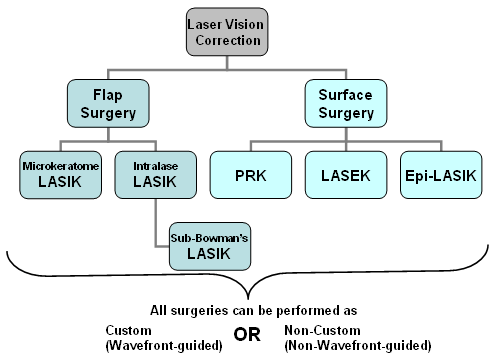
The introduction of bladeless LASIK has transformed the field of vision correction, providing patients with a safer and pleasant experience. In contrast to traditional LASIK, which utilized a physical blade to create a flap in the eye's outer layer, the blade-free technique employs a femtosecond laser to achieve this precision. This advancement has greatly reduced the chances of complications and has garnered the trust of both surgeons and patients alike.
One of the key advantages of bladeless LASIK is its ability to enhance precision and personalization. The laser flap creation minimizes human error and allows for a more tailored approach to each individual's unique eye anatomy. Patients often enjoy a quicker recovery time and reduced postoperative pain, leading to a more satisfying overall experience. By removing the blade, surgeons can now offer a smoother procedure with results that often exceed those achieved through traditional methods.
As a consequence, many experienced LASIK surgeons have adopted this technology and made it the norm in their clinics. This shift represents a dedication to providing the highest level of care, aligning surgical techniques with the newest technological advancements. Bladeless LASIK not only demonstrates the evolution of vision correction but also underscores the ongoing dedication of laser eye surgeons to improve patient outcomes and quality of life.
Patient Stories and Changes
Many clients report significant events after undergoing LASIK surgery with an skilled LASIK specialist. These individuals commonly tell accounts of how their vision enhancement has enhanced their daily lives, permitting them to participate in pursuits that were at one time hard or out of reach due to poor eyesight. Simple joys such as perusing a book without glasses, enjoying spontaneous outdoor activities, or playing sports can become a fact, leading to a refreshed sense of freedom and pleasure in life.
Some patients opt for a bladeless LASIK method, allowing for a more precise and comfortable experience. They often speak of the minimal downtime and quick recovery associated with this advanced method. The positive improvements are not just restricted to physical vision but extend into emotional and psychological advantages as well, with boosted self-esteem and assurance after the surgery. The narratives emphasize how these enhancements can favorably influence connections and professional opportunities.
In telling their transformative experiences, many individuals express appreciation towards their laser eye specialist for not only achieving exceptional results but for giving reassurance and support throughout the process. The personal connections established between individuals and their surgeons frequently play a crucial role in alleviating fears and ensuring a positive experience. As patients accept their new vision, they inspire others considering LASIK to take the step toward a clearer, more colorful future.
Future Innovations in Laser Eye Surgery
As tech continues to advance, the future of laser eye surgery appears bright, especially with advancements in customized treatment. Experienced Lasik doctors are utilizing artificial intelligence and data analytics to tailor procedures based on unique corneal topography. This personalization not only improves the precision of the surgeries but also optimizes outcomes for patients, allowing for more rapid recovery times and better vision.
Another area of notable growth is in no-blade LASIK techniques. These methods utilize femtosecond lasers for corneal flap creation, minimizing the risk of complications associated with traditional microkeratomes. As more laser eye surgeons adopt these no-blade approaches, patients can look forward to procedures that are not only less risky but also more comfortable. The ability to perform flapless LASIK is also gaining traction and could become a common practice in the sector, offering even more choices for patients seeking visual enhancements.
Finally, we are likely to see a rise in integrative therapies that fuse LASIK with other treatments to address various visual problems. For instance, some LASIK surgeons are exploring how to efficiently combine LASIK with implantable contact lenses or cataract surgery. This integrated approach aims to cater to a wider range of visual impairments, ensuring that patients of all ages can take advantage of advanced laser eye surgery techniques, paving the way for enhanced quality of life.